
Senthilnathan Rajagopal
Senior Technical Consultant
AI-Driven Help Desk Transformation
Introduction
The traditional help desk is undergoing a radical transformation. What was once a reactive, ticket-driven support function – focused on resolving user issues after they occurred – is now evolving into an intelligent, automated, and experience-led service model powered by Artificial Intelligence (AI). This shift marks a new era in enterprise support that emphasizes proactive engagement, predictive insights, and seamless user experiences.
AI-driven help desk transformation is not simply about deploying chatbots or automating ticket routing. It represents a fundamental shift from manual problem-solving to proactive, context-aware, and outcome-oriented service delivery – leveraging Machine Learning (ML), Natural Language Processing (NLP), and predictive analytics to redefine how support teams operate.
What is AI-Driven Help Desk Transformation?
Modern AI-powered help desks have evolved from manual, reactive support to intelligent, automated service. They anticipate user needs, recommend solutions before issues escalate, and continuously learn from past interactions to enhance accuracy and efficiency – reducing resolution time and operational costs while empowering agents to focus on complex, high-value tasks that require human empathy and critical thinking.
Ultimately, AI-driven transformation is about creating a balance between automation and human intelligence to deliver faster, smarter, and more personalized support. The statistics below, sourced from ravenna.ai/blog, illustrate how earlier systems have fallen short and how adoption is rapidly accelerating:
| Aspect | Traditional Help Desk | AI-Driven Transformation |
| Cost per ticket | ~$22 per interaction (manual handling) | Significantly reduced through automation of repetitive requests |
| Agent productivity | 60–70% of time on repetitive tasks (e.g. password resets) | AI handles repetitive issues; agents focus on complex problem-solving |
| Automation adoption | Only 40% used AI for ticket resolution pre-AI era | Post-2024, majority of companies adopting AI for automation & predictive support |
| Digital transformation | Siloed systems; limited digitization before 2020 | Help desk software adoption rose from 11% (2020) to 53% (2024) |
| AI-powered automation | Minimal automation; reactive response model | By 2026, 80% of routine interactions expected to be managed by AI |
| Chatbot adoption | Few organizations used chatbots effectively | 80% of companies using or planning to use AI chatbots |
| AI in tech industry | Traditional tools dominated; low AI integration | 92% of tech companies adopting AI in support operations |
| Customer satisfaction | Manual support led to delays and low CSAT | 92% of businesses report improved satisfaction with AI chatbots |
| Future outlook | Reactive, ticket-based operations | By 2030, AI will manage most interactions – proactive and intelligent |

How is Agentic AI Redefining the Modern Help Desk?
Smarter, more intuitive support
Imagine a user trying to fix a recurring VPN issue while working remotely. In a traditional help desk, they log a ticket and wait hours. With an Agentic AI assistant, they simply type “My VPN keeps disconnecting” and the AI instantly diagnoses network logs, identifies a configuration mismatch, and walks them through a fix in under two minutes. It doesn’t just react; it understands context, learns device settings, and tailors instructions.
A teammate that keeps improving
At a global company, a support agent works alongside Agentic AI. Every time the agent solves a unique problem, the AI observes, learns the process, and stores that knowledge. A week later, when another user faces the same issue, the AI proactively suggests the same fix – faster and more accurately. Soon it’s handling 60% of common tickets independently, while the agent focuses on complex cases. The AI behaves like a teammate: constantly learning, collaborating, and evolving.
It’s already happening now
If you’ve chatted with support on platforms like Microsoft, Amazon, or your mobile provider lately, you’ve experienced Agentic AI in action. Instead of robotic responses, it now engages in natural conversations – remembering preferences, suggesting fixes based on history, and escalating to a human when it detects frustration. This isn’t science fiction. It’s redefining customer support across industries, right now.
How Agentic AI Has Become the New First-Level Support Agent
It reasons, not just responds
Unlike traditional chatbots, Agentic AI understands context, asks follow-up questions, and diagnoses issues logically. When a software engineer says, “My laptop isn’t connecting to Wi-Fi,” the AI asks targeted questions, reasons that her corporate VPN configuration is outdated, and walks her through fixing it – replacing rigid Q&A scripts with conversational diagnosis.
It takes real actions through system integrations
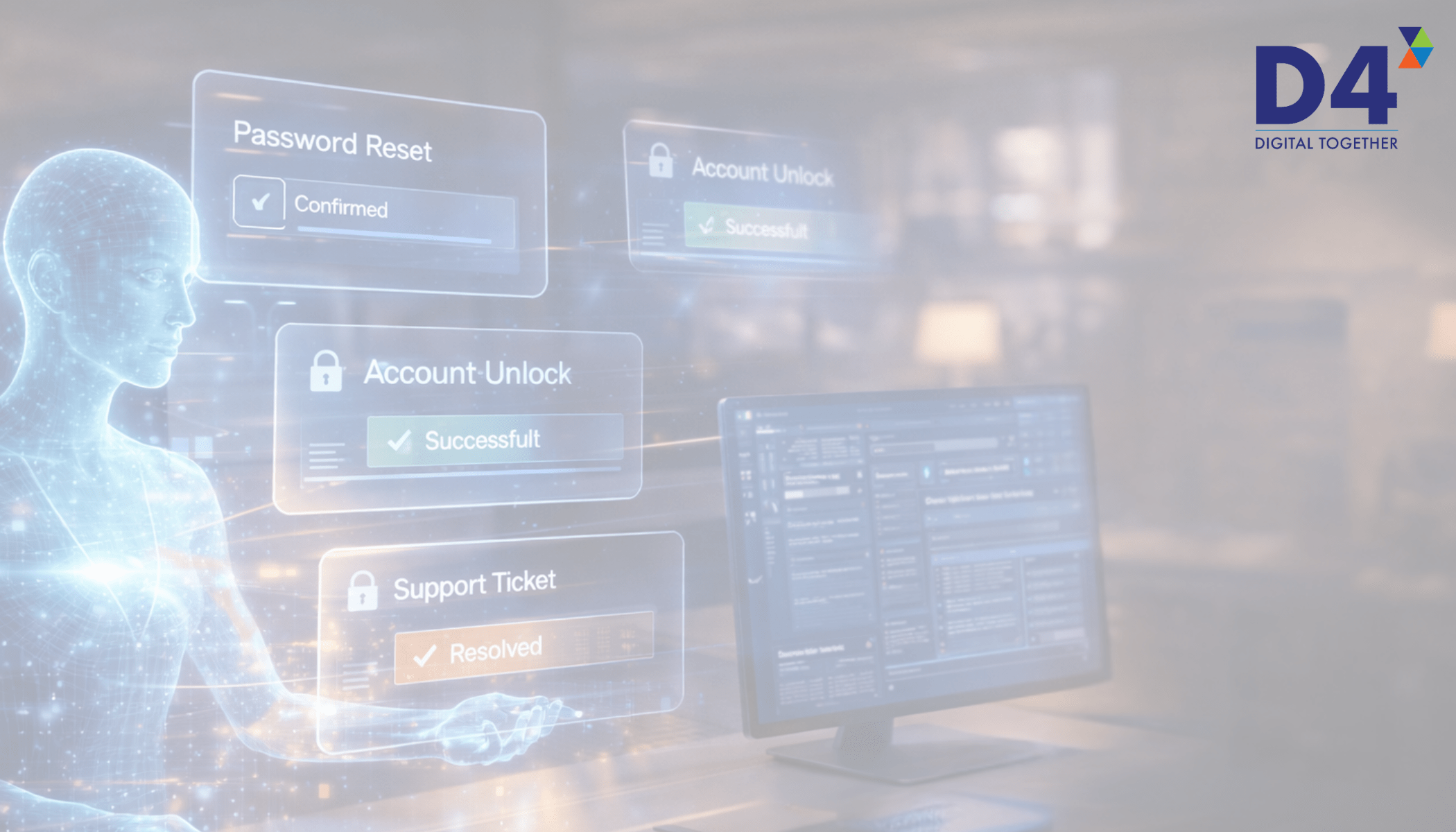
Agentic AI connects to tools like CRM, billing systems, and ticketing platforms to perform tasks autonomously. A user messages: “I need to reset my password and unlock my account.” The AI verifies identity via CRM and Active Directory, resets the password, and sends a secure one-time link – all without human intervention. Unlike legacy bots that could only tell users what to do, this AI actually does it.
It handles high-volume L1 tasks at scale
Most first-level support issues are routine, and Agentic AI can resolve 60–80% of them instantly. During a product launch, a large e-commerce firm’s help desk receives 10,000+ refund and order status queries per hour. The AI automatically handles 70%, providing instant refunds where policy allows and escalating exceptions – reducing average response time from 6 hours to under 3 minutes.
It makes decisions and escalates intelligently
When a telecom customer reports a failed renewal and a double charge, the AI checks billing logs, confirms the issue, and issues a refund per company policy. When it detects the matter involves an international payment gateway, it escalates – with full context – to a human supervisor. The escalation is logical, policy-driven, and efficient.
It enables 24/7 support with consistency
A global SaaS company supports customers in 40 countries. While human agents are limited by time zones, Agentic AI operates round the clock – managing thousands of simultaneous chats across languages, delivering consistent, policy-aligned answers at 3 a.m. the same way it does at 3 p.m.

Balancing AI Automation with Human Empathy
Balancing AI automation with human empathy means combining AI’s speed and efficiency with the understanding and compassion that only humans can provide.
- Blend efficiency with emotion. When a bank customer reports a lost debit card at midnight, the AI instantly blocks the card and issues a replacement. The next morning, a human agent calls to reassure the customer and ensure they feel secure. Together, AI and humans deliver speed with empathy.
- Human-in-the-loop approach. Agentic AI reviews tickets, suggests likely causes, drafts replies, and summarizes customer history. Human agents review, personalize the tone, and add emotional understanding before sending. AI supports – humans decide.
- Empathy still drives loyalty. A frustrated traveller messages an airline’s chatbot about a delay. The AI explains policy and offers rebooking. Sensing continued frustration, it escalates to a human who listens, apologizes sincerely, and offers a travel voucher. That human connection converts frustration into loyalty – something automation alone cannot achieve.
- Design empathetic AI experiences. A healthcare portal trains its Agentic AI to use calm, reassuring language – “I understand how stressful this must feel” and seamlessly connects patients with live counsellors when needed. The system feels genuinely caring, not mechanical.
- Continuously measure and adapt. An e-commerce company tracks CSAT, FCR, and escalation rates across AI and human agents. When feedback shows conversations feel too robotic, they adjust the AI’s tone, add empathy training data, and fine-tune escalation triggers – keeping the balance between efficiency and compassion constantly improving.
The Future of the Help Desk is Hybrid and Intelligent
AI-driven help desk transformation is not about replacing people with machines – it’s about reimagining support systems around intelligence, scalability, and human experience. The modern help desk thrives on a hybrid model, where Agentic AI serves as the new digital frontline, resolving routine queries instantly while empowering human agents to focus on empathy, creativity, and complex problem-solving.
This evolution marks a shift from reactive ticket resolution to proactive, context-aware, and outcome-oriented service delivery. By blending automation with human understanding, organizations can achieve faster response times, consistent service quality, and deeper customer trust.
The future of the help desk is not just automated – it is intelligent, empathetic, and collaborative.
And that future isn’t approaching. It’s already here.