
For decades, transformation has been treated as an inside-out exercise.
Upgrade the ERP. Modernise applications. Move to the cloud. Automate processes. Deploy AI.
Then wait for transformation to happen.
But here is the uncomfortable truth: the enterprise of the future cannot transform in isolation.
The technologies shaping business today are simply too interconnected, specialized and fast-moving to be owned, built and mastered by any single organisation. AI needs data. Data needs platforms. Platforms need cloud. Cloud needs cybersecurity. Innovation needs startups, partners, developers, customers and increasingly – machines collaborating with machines.
The future of transformation, therefore, will not belong to the enterprise with the biggest technology stack.
It will belong to the enterprise with the strongest ecosystem.
From Building Everything to Connecting Everything
The old competitive advantage was ownership.
Own the infrastructure. Own the talent. Own the technology. Control the value chain.
The new advantage is orchestration.
Can an organisation bring together the right capabilities at the right moment? Can its data flow intelligently across boundaries? Can partners, platforms, people and AI agents work towards a shared outcome?
A technology stack is merely a collection of tools.
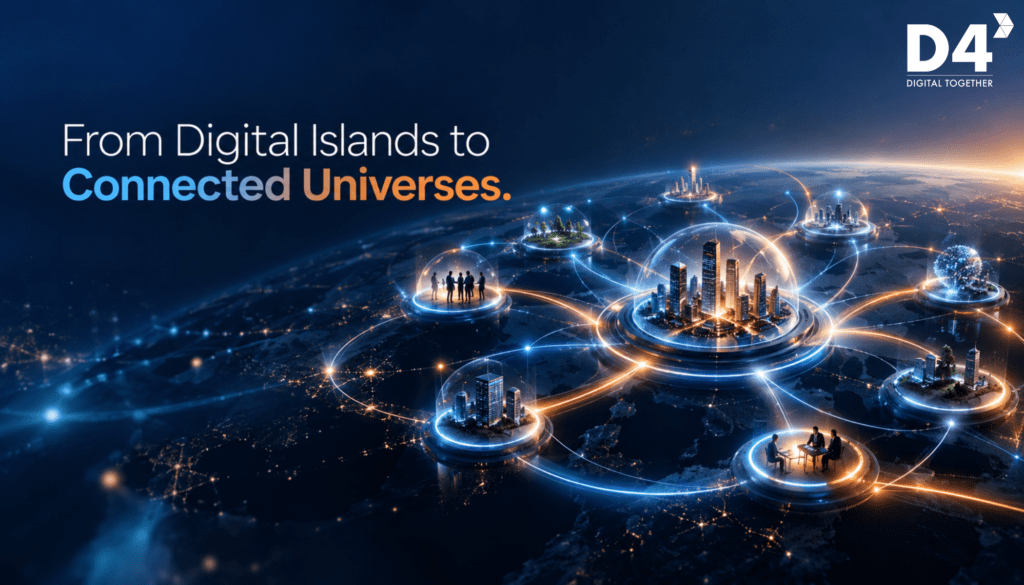
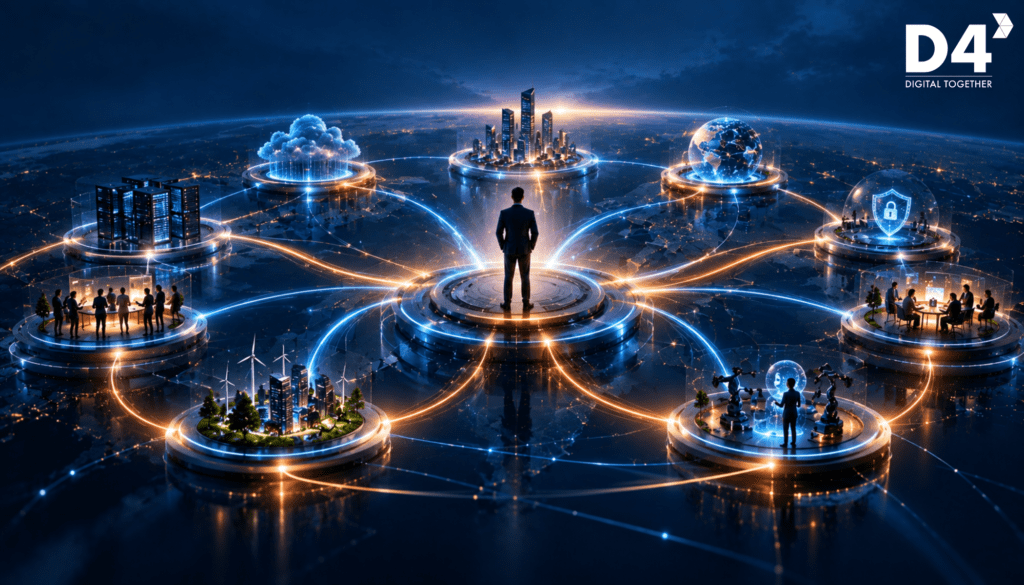
An ecosystem is a living network of capabilities.
That distinction may define the next era of digital transformation.
Research and industry thinking increasingly point towards the same shift: transformation outcomes depend not simply on selecting the best individual technologies, but on interoperability, connected data, shared governance and the ability to coordinate partners around business outcomes.

The Enterprise Is Becoming an Ecosystem Orchestrator
Imagine an organisation as an orchestra.
The cloud provider is not the orchestra.
The AI platform is not the orchestra.
The cybersecurity company is not the orchestra.
Neither is the managed services partner.
The magic lies in how they perform together.
This is where leadership must evolve.
Tomorrow’s CIO may spend less time asking, “What technology should we buy?”
And more time asking:
“What ecosystem should we design?”
The strongest organisations will create architectures that allow capabilities to enter, interact and evolve without rebuilding the enterprise every few years. They will replace rigid vendor relationships with collaborative networks. They will increasingly measure partners not by contracts signed, but by outcomes jointly created.
AI is accelerating this shift even further. As automation absorbs traditional implementation and support work, ecosystem value is moving towards advisory, governance, orchestration and the ability to turn multiple technologies into coherent business outcomes.
But Ecosystems Are Not Automatically Better
There is a danger here.
More partners can also mean more complexity.
More platforms can mean more silos.
More AI can mean more chaos.
The future will therefore not be won by organisations with the largest ecosystem.
It will be won by those with the best-orchestrated ecosystem.
That requires an invisible but critical layer of transformation: integration, governance, interoperability, cybersecurity and continuous management.
The Art of Making Many Work as One
This is where a technology and managed services partner such as D4 Insight can play a far more strategic role than simply maintaining systems.
As a Digital Together technology partner, D4 Insight can help organisations connect the moving parts of their digital ecosystem – bringing together cloud, applications, data, automation, AI and operational services into a more coordinated and continuously evolving environment.
The opportunity is not merely to manage technology.
It is to help orchestrate transformation.
Because the next great enterprise may not be the one that does everything itself.
It may be the one that knows how to bring the right capabilities together and make them work as one.
The future of digital transformation is not Enterprise First.
It is Ecosystem First.
And ultimately, it is Digital.Together.